



Automation of technological processes
Automation of technological processes is a set of solutions designed to ensure smooth, accurate and uninterrupted operation of equipment and production processes. Automation allows you to replace or reduce manual operations, optimize technological sequences, improve equipment management and ensure greater work efficiency. This is a necessary step for modern companies striving for stable growth, quality and competitiveness.
Process automation involves implementing control systems that allow real-time monitoring of process status, control of equipment, analysis of operating parameters, and rapid response to changes. This reduces the risk of human error, increases production speed, and ensures consistent quality of the final product.
What does automation of technological processes include?
1. Process analysis
Existing technological processes are evaluated;
Ineffective, unstable or dangerous locations are identified;
The goals to be achieved through automation are defined.
An automation concept is selected;
The required components and control logic are defined;
A clear implementation plan is drawn up.
PLC controllers, sensors, drives and control modules are selected;
Control logic and work sequences are being developed;
SCADA and HMI visualizations are being developed.
2. Preparation of a technical solution
3. Development of a management system
6. Data monitoring and optimization
The system is connected to production lines, devices or nodes;
Compatibility with existing management systems is ensured;
All elements are combined into one functioning structure.
4. Integration into existing equipment
The accuracy and speed of the processes are checked;
Adjustable automatic sequences and protections;
Work is being tested under real conditions.
5. Testing and commissioning
The system collects data on equipment performance;
Analysis and improvement are carried out;
Adjustments are made as needed.
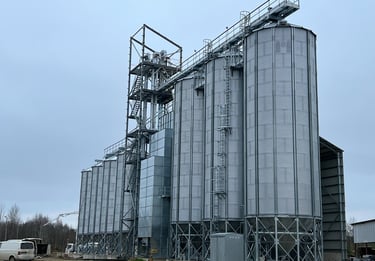
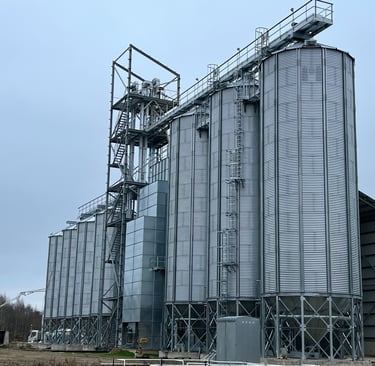


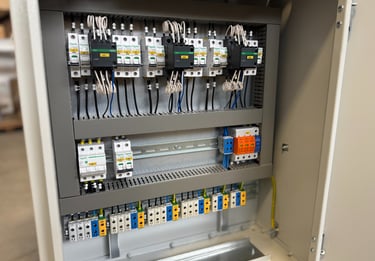
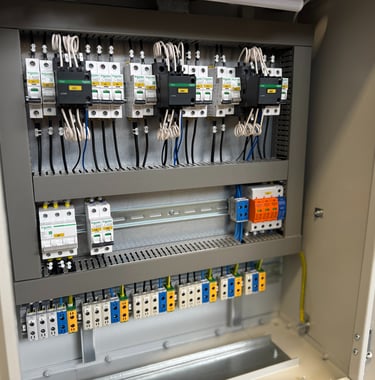
More stable processes - fewer errors and interruptions
High precision – consistent production quality
Lower costs – optimal use of energy and resources
Safety – fewer dangerous manual operations
Faster response – real-time data and control
Benefits of automation
Automation on technological processes
Several important aspects provided by technological process automation:
Increased Productivity:
Automated processes operate continuously and without interruptions, enhancing the efficiency of production or service delivery.
Consistency and stability increase overall productivity and enable quicker response to market needs and changes.
Quality Control:
Automated control systems can ensure consistent quality of products or services.
Automatic defect/error detection solutions can be implemented.
Optimal Resource Utilization:
Automation allows for precise and efficient planning of available resources, optimizing the use of materials, labor, and energy.
Employee Safety and Efficiency:
Automation can reduce or eliminate physical work, especially in hazardous or complex processes.
It also eliminates repetitive, monotonous tasks, allowing employees to devote their time to more creative, strategic planning tasks.
Data Analysis and Response:
Automated processes generate data that can be used for data analysis purposes.
Data analysis can help identify opportunities for efficiency improvement and forecast future trends.
All these benefits together can enable companies to better adapt to changing market conditions, increase competitiveness, and achieve more efficiently long-term business goals.
Efficiency and Cost Reduction:
Automated systems can perform repetitive tasks faster and more accurately than humans, reducing labor time and the likelihood of errors.
Automation allows for optimizing labor costs and increasing the efficiency of processes.